The Advent of Human Technology: Elektro Networked
Technology, the driving force behind our modern world, has the power to significantly advance our societies. It has revolutionized every aspect of our lives, from communication and healthcare to education and entertainment. The rapid pace of technological innovation has brought about unprecedented changes, making our lives easier and more connected. However, as we continue to embrace and rely on technology, we must also acknowledge and address the potential threats it poses to our very existence.
As we look towards the future, the field of robotics promises even more exciting developments. From self-driving cars to robots that can interact with humans in natural ways, the possibilities are endless. As we continue to push the boundaries of what robots can do, we can look forward to a future where robots are an integral part of our everyday lives. However, this future is not without its challenges. The rise of robotics and AI also brings with it potential dangers, such as job displacement, privacy concerns, and ethical dilemmas. As we stand on the brink of this new era, it is crucial that we navigate these challenges with care and foresight.
The key lies in creating a balance, leveraging technology to drive progress while also implementing measures to mitigate its potential risks. This includes establishing robust data protection laws, promoting digital literacy, and fostering ethical considerations in technological development. This balancing act isn’t anything new. Humans have been wrestling with the dichotomous nature of technology since first taming fire. As we charge ahead into a bold new robotuc future, let’s remember the past breakthroughs that have paved our way.
I Robot
The concept of robotics, which is often associated with the forefront of contemporary technology and innovation, surprisingly has its roots deeply embedded in the annals of history. The idea of creating machines that could mimic human actions, a fundamental principle of robotics, can be traced back to ancient civilizations. This historical perspective underscores the enduring human fascination with the potential of technology to replicate human behavior and actions. It is a testament to our long-standing curiosity and ambition to create automated machines, a journey that has led us to the advanced field of robotics and AI we know today.
Ancient Automatons
The ancient Greeks were among the first to explore the concept of robotics. They developed simple automatons, mechanical devices that could perform certain tasks. These early machines were often used in religious ceremonies or as tools to demonstrate basic scientific principles. For instance, the Greek engineer Hero of Alexandria created a variety of mechanical devices, including a steam-powered device called an aeolipile and a wind-powered organ.
The Antikythera mechanism, often hailed as the world's first analog computer, is a testament to the advanced scientific knowledge of the ancient Greeks. Discovered in a shipwreck off the Greek island of Antikythera in 1901, this complex device was used to predict astronomical positions and eclipses for calendrical and astrological purposes. It could also calculate the cycles of the ancient Olympic Games, known as Olympiads.
Constructed from bronze and containing a sophisticated system of gears, the Antikythera mechanism is believed to have been designed and built by Greek scientists between 150 and 100 BC, or possibly as early as 205 BC. Despite its age, the mechanism's complexity and precision would not be matched until the development of mechanical astronomical clocks in Europe in the 14th century.
While the Antikythera mechanism represents the scientific achievements of the ancient Greeks, Talos embodies their creative imagination. According to Greek mythology, Talos was a giant automaton made of bronze who guarded the island of Crete. He was given to King Minos of Crete by Zeus or Hephaestus, the god of blacksmiths and invention.
Talos would circle the island's shores three times daily to protect it from invaders. If a ship approached, he would hurl massive rocks at it or heat himself red-hot and grapple with the intruders, burning them. Despite being a creature of myth, Talos reflects the ancient Greeks' fascination with the idea of creating life-like machines.
The myth of Talos has endured, capturing the imagination of artists and writers throughout the centuries. As one of the earliest depictions of a robot, Talos symbolizes the timeless human dream of creating artificial life and continues to influence our perception of robotics and artificial intelligence.
Mechanical Marvels of the Middle Ages
The Middle Ages, often viewed as a period of stagnation, were in fact a time of significant innovation, particularly in the field of mechanical engineering. This era saw the creation of intricate mechanical devices, often designed for entertainment or artistic purposes, that laid the groundwork for modern machinery and even the concepts of robotics and artificial life.
Mechanical marvels of the Middle Ages were not merely for show. They represented significant advancements in engineering and technology. Among these were the famous mechanical clocks that adorned cathedrals and public buildings across Europe. These clocks, with their intricate gear systems and precise timekeeping, were a testament to the technical prowess of the time.
Automata, complex mechanical devices that could perform certain tasks, were also popular in royal courts. These devices, often designed to mimic human or animal movements, can be seen as early precursors to modern robots. The fascination with creating life-like machines that could carry out tasks autonomously is a theme that continues in today's exploration of artificial intelligence.
One of the most impressive examples of medieval mechanical engineering is the astronomical clock in Prague. Built in the early 15th century, this clock is more than just a timekeeping device. It tracks the position of the sun, moon, and certain planets, a feat of engineering that demonstrates the advanced understanding of astronomy and mechanics in the Middle Ages.
The clock's complex system of gears and mechanisms, which allow it to perform its various functions, is a testament to the technical skills of the craftsmen of the time. It is a clear example of how the mechanical marvels of the Middle Ages laid the foundation for later developments.
The Birth of the "Robot"
Despite these early forays into the world of automated machines, the term "robot" did not come into use until the 20th century. It was first introduced by Czech playwright Karel Capek in his play "R.U.R. (Rossum's Universal Robots)" in 1921. The play, which centers around a company that creates artificial people, was a commentary on the industrialization and dehumanization of the modern world. The word "robot" comes from the Czech word "robota," which means "forced labor" or "serf."
The impact of Capek's play was profound. It not only introduced the term "robot" to the world but also sparked a global conversation about the implications of creating artificial beings. This dialogue continues today as we grapple with the ethical and societal implications of advanced robotics and artificial intelligence.
Elektro: The World's First Robot
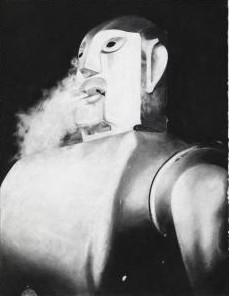
In the annals of robotics history, the name Elektro stands tall. This remarkable creation, often hailed as the world's first true robot, was a marvel of its time and continues to inspire awe and curiosity. Elektro's journey is a testament to the limitless potential of human ingenuity.
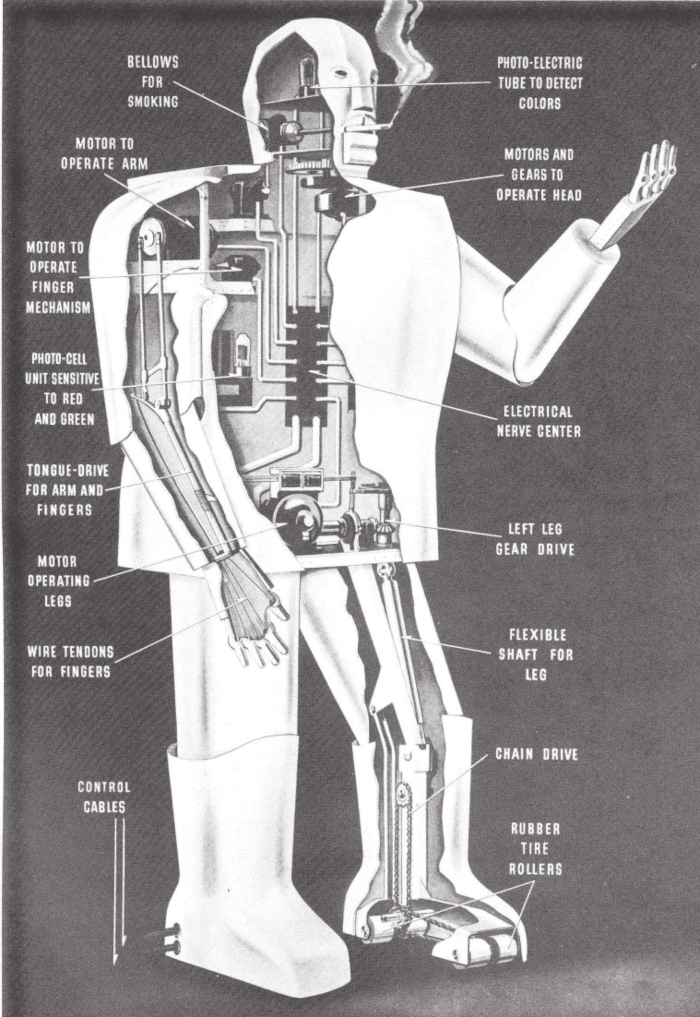
Elektro was conceived and built by the Westinghouse Electric Corporation between 1937 and 1938. The brainchild of engineer Joseph Barnett, Elektro was a towering figure, standing seven feet tall and weighing a hefty 265 pounds. This was made possible by a complex system of motors, gears, and cams that formed his mechanical skeleton. This intricate system allowed Elektro to move with a level of precision that was remarkable for the time.
Elektro was more than just a mechanical marvel. He was also a showcase of advanced electrical engineering. His "eyes" were photoelectric cells that could distinguish between red and green light. This allowed Elektro to interact with his environment in a way that few mechanical devices had ever managed before.
Elektro was also equipped with a voice command system. This system allowed him to respond to specific instructions, further enhancing his interactive capabilities. The "brain" of Elektro was a 25-kilogram assembly of electric relays and signal lights. This complex system enabled Elektro to perform a variety of tasks, demonstrating the potential of robotics.
Elektro's Debut and Career
The 1939 New York World's Fair was a significant event that showcased the world's advancements in technology and science. The theme of the fair was "The World of Tomorrow," and it was held in Flushing Meadows-Corona Park in Queens, New York. The fair covered 1,216 acres and hosted over 44 million visitors during its two-season run. Elektro, the amazing mechanical man, was one of the most memorable attractions at the fair.
He was presented as a glimpse into a future where robots would become an integral part of daily life. Elektro could perform 26 different routines, including walking by voice command, counting on his fingers, smoking cigarettes, blowing up balloons, and moving his head and arms. His voice was provided by a 78-rpm record player hidden within his steel and aluminum body, and he could deliver a repertoire of about 700 words.
Elektro's performances were a sensation at the fair. He was featured in the Westinghouse Pavilion, where he performed hourly shows to the delight and amazement of the audience. The spectators were particularly impressed by Elektro's ability to mimic human actions and his interactive capabilities. Elektro could recognize the color red and the difference between a nickel and a dime. He could also 'read' the simple commands that were printed on cards by shining light through the card and into a photoelectric cell.
In 1940, Elektro was joined by Sparko, a robot dog created by the same company. Sparko could bark, sit, and beg, and was designed to interact with Elektro during the performances. The addition of Sparko added a new dimension to Elektro's performances and further captivated the audiences.
The reception to Elektro and Sparko was overwhelmingly positive. They were seen as marvels of modern engineering and were extensively covered in the media. The performances of Elektro and Sparko at the 1939 New York World's Fair marked a significant moment in the history of robotics, capturing the public's imagination and paving the way for future advancements in the field. Public fear of killer robots was still decades away.
Elektro the Robot – Movie Star
After the World's Fair, Elektro embarked on a cross-country tour, serving as a promotional tool for Westinghouse. His appearances ranged from corporate events to department store demonstrations, county fairs, and science exhibitions. Elektro captivated audiences across America with his robotic capabilities, furthering public interest in the possibilities of automation and artificial intelligence. This tour not only showcased Westinghouse's technological prowess but also helped to familiarize the general public with the concept of humanoid robots.
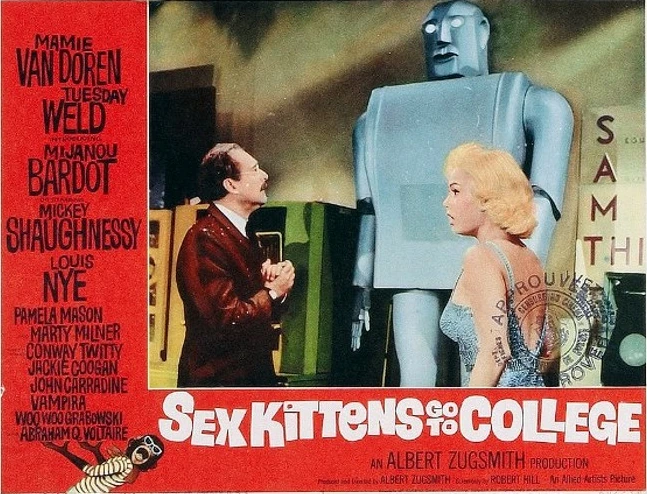
Elektro's journey didn't end with promotional tours. The charismatic robot eventually broke into show business, securing movie roles that further cemented his place in popular culture. His most notable silver screen appearance came in 1960, when he starred as "Thinko" in the film "Sex Kittens Go to College." This quirky comedy showcased Elektro alongside human actors, demonstrating how robots had captured the public imagination in the two decades since his World's Fair debut. While the role might seem an unusual choice for a technological pioneer, it underscored Elektro's versatility and enduring appeal, bridging the worlds of science and entertainment in a way that few other robots of his era could match.
Those experiences cemented Elektro in the public consciousness and continue to express themselves today. For instance, his memory was celebrated – albeit with a tinge of ominous foreboding – in the animated series Terminator Zero. Elektro was featured in a montage of historic robots in the first season's fifth episode, highlighting his significance in the evolution of robotics and artificial intelligence. This appearance in a popular science fiction series demonstrates Elektro's lasting impact on popular culture and his role as a forerunner to modern AI systems.
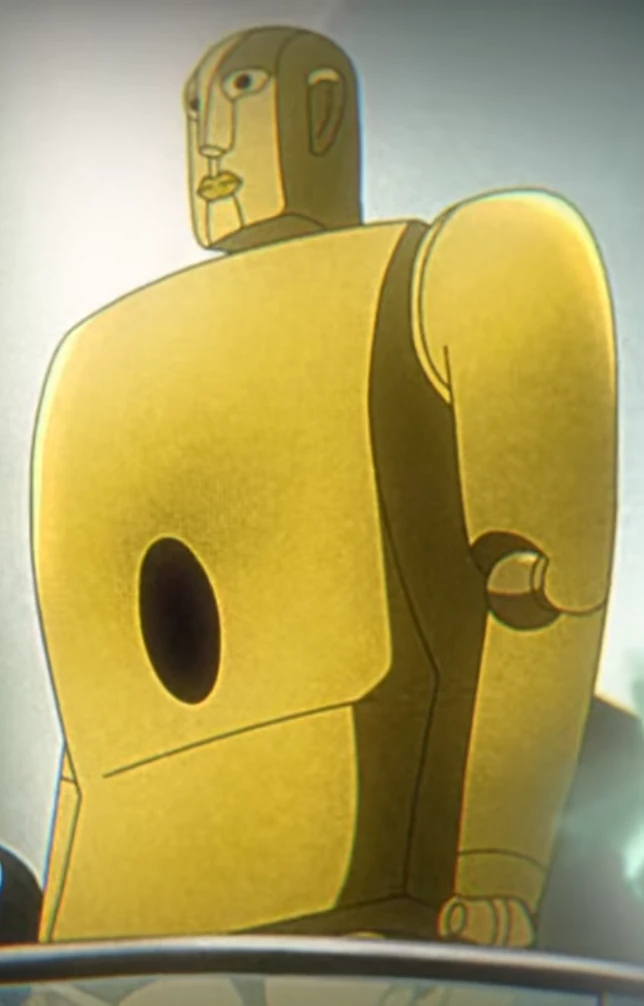
Terminator Zero
However, his inclusion also foreshadows a potential future where advanced AI becomes a threat, a concern that Elektro's original creators perhaps never envisioned.
This duality – both inspiration and cautionary tale – underscores Elektro's lasting impact on popular culture and his role as a bridge between the past and the future. He represents not only the early days of robotics but also the public's ongoing fascination and anxieties surrounding artificial intelligence. As we continue to develop increasingly sophisticated AI systems, Elektro serves as a reminder of both the potential and the perils of this technology. His legacy will likely continue to be explored and debated in popular culture for years to come, prompting us to consider the role we want AI to play in our future.
Whatever the future holds for Elektro, his on-screen legacy will always endure.
Elektro's Legacy and Influence
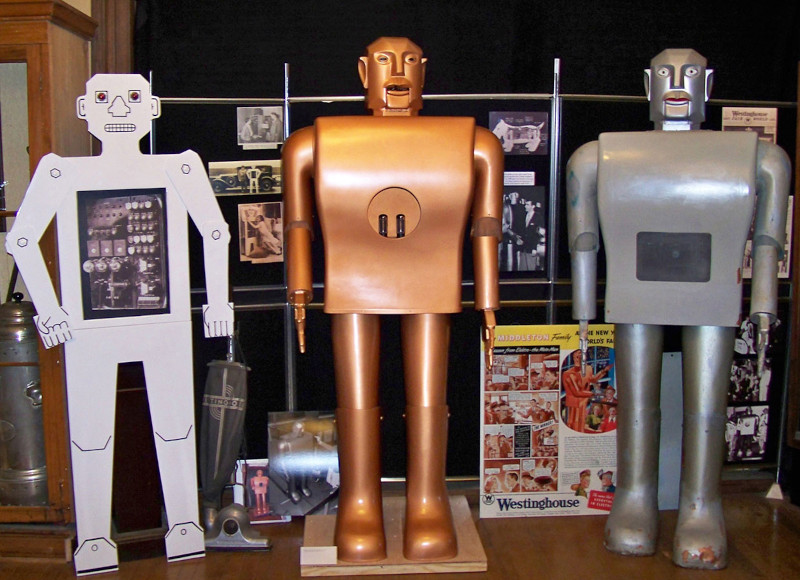
Despite his popularity, Elektro eventually fell into obscurity as advancements in robotics made him seem dated. However, his influence on the field of robotics is undeniable. Elektro's legacy paved the way for modern advancements in robotics, inspiring scientists and engineers to push the boundaries of what machines can do.
Today, Elektro is housed at the Mansfield Memorial Museum in Ohio, where he continues to fascinate visitors with his imposing presence and historical significance. A replica of Elektro, along with his canine companion Sparko, is also on display at The Henry Ford Museum.
Elektro's journey from the Westinghouse labs to the world stage and beyond is a testament to the power of innovation and the enduring fascination with the possibilities of robotics. As humans continue to explore the potential of artificial intelligence and machine learning, Elektro serves as a reminder of where it all began. Today, we possess a technological mastery never dreamed of in previous ages. We have the power to hear music on demand and play Yahtzee online, but also to destroy the planet in any number of ways. How will we proceed from here?
What would Elektro do?
Elektro Update
“We are all interested in the future, for that is where you and I are going to spend the rest of our lives.”
The future of Elektro, the iconic Westinghouse robot, is currently uncertain due to ongoing disputes over ownership following the death of Scott Schaut, the longtime curator of the Mansfield Memorial Museum. After Schaut's passing, questions about the ownership of various items, including Elektro, have surfaced. Schaut's estate is in probate, and the ownership of Elektro might ultimately be determined through legal processes.
There are conflicting claims regarding where Elektro should reside. One affidavit suggested that when the museum no longer wished to keep Elektro, he was to be sent to the Henry Ford Museum in Michigan. However, some family members and local organizations, including the North Central Ohio Industrial Museum, believe Elektro should stay in Mansfield to honor his historical significance to the area. Until the probate court finalizes the decision, Elektro will remain at the Mansfield Memorial Museum, with no immediate plans to move him.
